
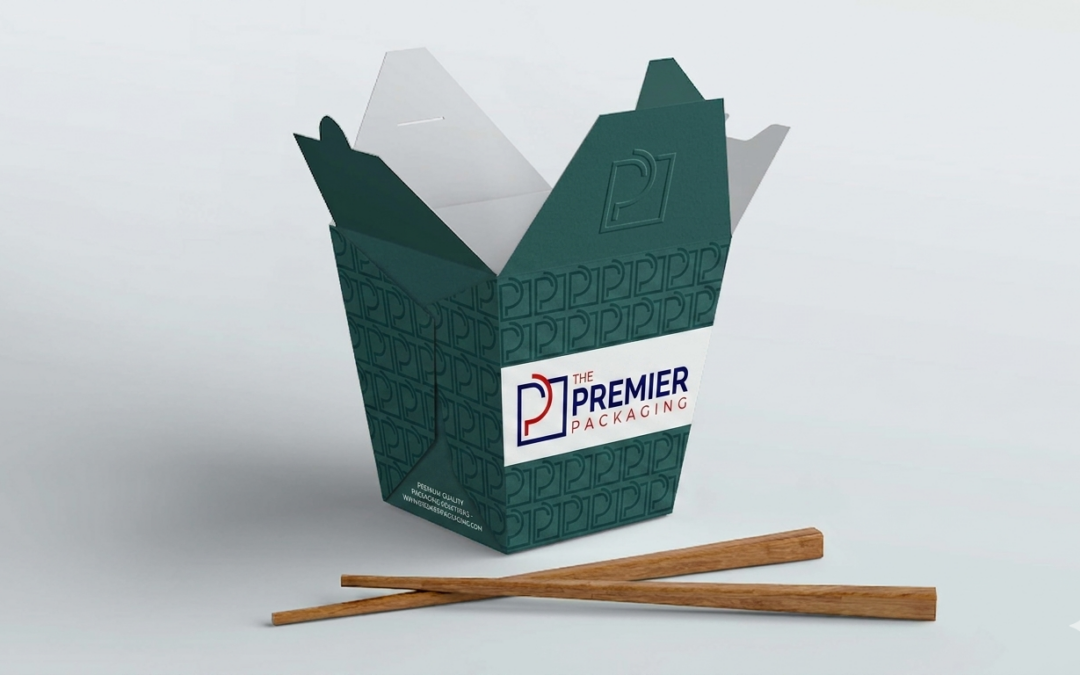
Next time you pick up a Chinese takeaway box, take a closer look. The curved piece of paper is recognizable. The red pagoda illustrations on the white surface are nostalgic. But the genius is the thin, curved wire handle, right there on the top, in plain view. It appears to be almost too easy. A loop of metal wire was bent, and looped through two small holes in the paperboard. And that handle bears hot noodles, heavy sauces, fried rice, without cracking, without slicing into your hand, without coming off the wet, steaming box. This design has stood almost unaltered in more than 50 years. This is because of a reason. The wire handle is not a by-word. It is a work of art in useful engineering.
The Issue to Be Solved
Prior to the introduction of the wire handle, takeaway food was delivered in folded paper bags or unwrapped paper cartons with no handles. Fried foods were served in waxed paper cones, which were folded in restaurants. Wet dishes such as chow mean or sweet and sour pork had a few choices. A paper bag is moisture absorbing and collapses at the bottom. A box without a handle made of cardboard needs two hands and balancing act. The leak issue was overcome by the paper Chinese take away box, also known as the oyster pail due to its original design being inspired by the oyster harvesting industry, with interlocking folded flaps to form a watertight seal. But it had to be carried away. Sticking a piece of paper handle to a wet surface is ineffective. The adhesive fails. The handle tears. The adhesion of the wire handle, however, is not based on adhesion. It is based on tension and compression.
The Real Workings of the Wire Handle
Using a typical Chinese takeaway box, which is made of paper, look at the handle attachment. The wire goes through two holes which are punched through the folded top flaps and reinforced. Pulling the handle, the wire will pull up the paperboard. The paperboard does not tear, however, since the load is spread. The handle wire is twisted into a U form and twisted back to form little hooks. The underside of the paperboard flaps is hooked. The hook is not loosened against the paper, but the weight of the food pulls it tighter.
Wire Handle vs. Alternatives
To enjoy the wire handle, think of what the food packaging industry has experimented with. The paper fastened on folded cartons with glue does not work when the glue comes into contact with water. Thick plastic rims are needed in the Snap-On handles of plastic, and these increase the cost of the material and waste to the environment. The paperboard itself cut-out handles undermine the strength of the box walls and form sharp edges that cut fingers. Die-cut finger holds work on lightweight and dry goods such as French fries but not a quart of hot soup or heavy noodles.
There are three ways in which the wire handle beats all these. First, it does not need an extra adhesive or complicated tooling. Second, it can be used when the paper box is soft due to steam. Third, it will be convenient to be used over more distance as the loop of wire can be pivoted and the box can hang straight instead of leaning over and spilling. On one side of a box there is a fixed handle that makes the box tilt. The handle is pivot-designed to maintain the level of the box and this is necessary when using liquids such as broth or sauce.
Scale Process of Manufacturing
When the restaurants purchase Chinese takeaway boxes on wholesale they are purchasing a product which has been perfected through millions of units of production. Special machinery is used to punch the holes, cut the wire to length, bend the hooks, and insert the wire into the box all in a fraction of a second. The tolerances are tight. When the holes are excessive, the wire comes through. When small, the wire cuts the paper when inserting it. The spacing of the two holes should be of the same width as the wire bend. One millimeter results in boxes that are not passing through the assembly line.
The Environmental Consideration
The wire handle has an interesting trade-off of the environment. The steel wire needs power to mine, refine and produce. It is not biodegradable. Nonetheless, steel can be recycled indefinitely and the little bit of wire per box, about two grams is a negligible material footprint when compared to plastic handles or alternatives made of a double-walled paper. More to the point, the wire handle allows the box itself to be composed of plain and uncoated paperboard. The entire box can be recycled in standard paper streams since the handle is not dependent on the moisture-resistant coating or laminates, with the removal of the wire. Other recyclers request consumers to remove the wire handle and recycle the paper part. Some have magnets on their sorting machines which pick up the steel automatically.
Why It has not changed over Decades
Industrial designers adore love to make things better. New materials emerge. Manufacturing processes evolve. But the paper Chinese takeaway boxes with the wire handle are the same as they were in the middle of the 20th century. It is not an innovation failure. It is an indicator of an issue that has been resolved. The wire handle is inexpensive, durable, easy to use, recyclable, and can be used in an automated assembly. Any substitution would have to meet all of those requirements and provide a significant enhancement. The premier packaging offer wholesale custom food with an emphasis on material quality and precision engineering.
Quiet Genius
Great design is easily overlooked. No one praises a wire handle when it works perfectly. It is not noticed until it fails. And the wire handle on Chinese take away boxes hardly ever breaks. It carries weights of hot, heavy food up stairs and across parking lots. It is suspended to bicycle handle bars. It is non-tangling in delivery bags. It is a silent, steady, and unobtrusive worker. It is the meaning of a masterpiece–not noisily and trumpet-tongued, but so ideally adapted to its purpose that it fades away. The following time you are carrying a paper takeaway box of Chinese food with its wire handle, you should stop and admire it. A bit of bending wire does not appear much. But it bears dinner. And that is all.


