
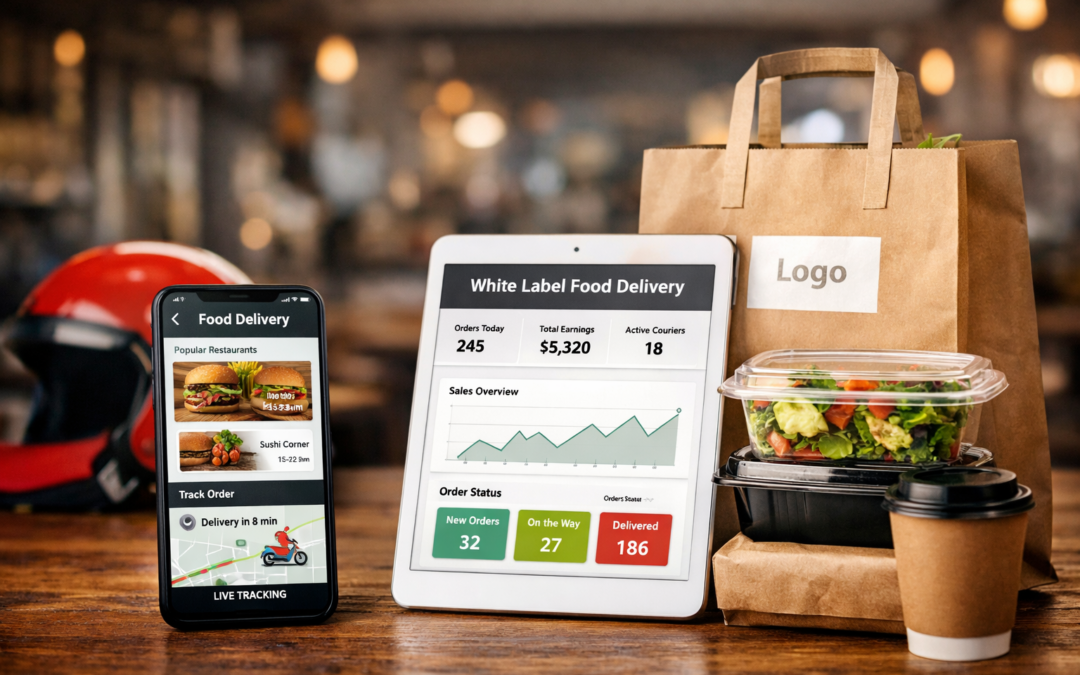
The food delivery market continues to expand rapidly as consumers increasingly prefer ordering meals through mobile apps. For startups and restaurant owners, entering this competitive space can be expensive and time-consuming if built from scratch. A white label food delivery app offers a faster, cost-effective alternative that allows businesses to launch quickly without compromising on features or scalability. Instead of spending months on product development, entrepreneurs can focus on marketing, partnerships, and operations while leveraging ready-made technology tailored to their brand.
Understanding the Concept of a White Label Food Delivery App
A white label food delivery app is a pre-built, customizable solution that businesses can rebrand as their own. Unlike custom development, where everything is built from the ground up, white label solutions come with core features such as restaurant listings, order management, payment integration, delivery tracking, and admin dashboards already integrated. The business purchasing the solution customizes branding elements including logo, colors, domain, and app store listings. This approach significantly reduces development time and cost while still allowing room for personalization and expansion.
The primary advantage of adopting a white label model is speed. Startups can go live in weeks rather than several months. Moreover, since the core technology is already tested and refined, the risk of technical errors is minimized compared to first-time builds.
Why Startups Prefer White Label Over Custom Development
Launching a food delivery platform from scratch involves UI/UX design, backend development, API integrations, quality assurance, and continuous testing. These processes require significant investment and a skilled technical team. A white label food delivery app eliminates these complexities.
First, it offers predictable costs. Custom development budgets can escalate due to unforeseen technical challenges, whereas white label packages typically come with clear pricing structures. Second, it reduces technical risk because the solution has already been implemented for other clients and refined over time. Third, startups can allocate more resources toward customer acquisition and restaurant onboarding instead of development expenses.
Additionally, white label solutions often include ongoing maintenance and updates, ensuring the platform remains secure and compatible with the latest operating systems.
Core Features Every White Label Food Delivery Platform Must Include
A reliable white label solution should provide comprehensive features across user, restaurant, driver, and admin panels.
On the customer side, features include user registration, restaurant search filters, real-time order tracking, secure payment gateways, reviews, and push notifications. The restaurant dashboard must support menu management, pricing updates, order acceptance, performance analytics, and payout tracking. For delivery partners, GPS navigation, route optimization, delivery status updates, and earnings tracking are essential.
The admin panel should offer centralized control over users, vendors, commissions, promotions, analytics, and dispute management. Advanced platforms also integrate AI-based recommendations, loyalty programs, and marketing automation tools to enhance engagement and retention.
The Role of Food Delivery App Development Services in Ensuring Quality
Although a white label product is pre-built, selecting professional food delivery app development services remains critical. These services ensure proper customization, seamless integration with payment systems, SMS gateways, cloud hosting, and third-party APIs.
Professional developers conduct thorough testing before launch to ensure smooth functionality across Android, iOS, and web platforms. They also optimize app performance, enhance security protocols, and ensure compliance with regional data protection regulations. In addition, experienced service providers assist with app store deployment, server setup, and post-launch maintenance.
By partnering with the right development team, startups avoid technical pitfalls and ensure their platform operates efficiently from day one.
How a Food App Development Company Adds Strategic Value
A reliable food app development company does more than deliver software. It provides strategic consultation based on market trends, competitor analysis, and user behavior insights. Such companies understand how to structure commission models, subscription plans, and promotional strategies for sustainable revenue growth.
They also offer scalable architecture, allowing startups to expand into multiple cities or add features like grocery delivery, cloud kitchen integration, or multi-vendor marketplace functionality. A well-established company can guide entrepreneurs in choosing the right technology stack, cloud infrastructure, and analytics tools that align with business goals.
Moreover, they help design intuitive user experiences that increase order frequency and reduce cart abandonment rates, which are critical for profitability.
Revenue Models You Can Implement with a White Label Food Delivery App
A white label food delivery app supports multiple monetization strategies, allowing startups to diversify revenue streams.
The commission-based model is the most common approach, where the platform charges restaurants a percentage of each order. Subscription models allow restaurants to pay a fixed monthly fee for listing and marketing exposure. Delivery charges can be added to each order, with flexible pricing based on distance or demand.
Advertising and featured listings provide additional income by allowing restaurants to promote their offerings. Some platforms also integrate loyalty programs and premium customer memberships that offer benefits such as free delivery or exclusive discounts.
By combining multiple revenue channels, startups can create a balanced and scalable financial model.
Steps to Launch Your Food Startup Using a White Label Solution
Launching your platform requires strategic planning and execution.
First, define your target market. Decide whether you want to focus on a specific cuisine, local restaurants, or a broader multi-vendor model. Next, select a reliable provider offering comprehensive food delivery app development services with proven experience.
Once the platform is customized to reflect your branding, onboard restaurants by highlighting the benefits of digital ordering and wider customer reach. Simultaneously, recruit delivery partners and establish efficient logistics processes.
After thorough testing, deploy the app on Google Play and the Apple App Store. Post-launch, invest in digital marketing campaigns, influencer collaborations, and promotional offers to attract early adopters.
Continuous monitoring and performance analysis will help you refine operations and enhance user experience over time.
Cost Considerations and Budget Planning
The cost of launching a white label food delivery app varies depending on customization requirements, feature complexity, and service provider expertise. Generally, white label solutions are significantly more affordable than custom-built platforms.
Basic packages may include core features and limited customization, while advanced packages offer AI integrations, multi-city expansion capabilities, and advanced analytics dashboards. Additional costs may include cloud hosting, third-party API subscriptions, payment gateway fees, and marketing campaigns.
Working with an experienced food app development company ensures transparent pricing and avoids hidden expenses that can disrupt your financial planning.
Scalability and Long-Term Growth Opportunities
One of the strongest advantages of a white label solution is scalability. As your user base grows, the platform should handle increasing traffic without compromising performance. Cloud-based infrastructure enables seamless scaling while maintaining security and speed.
Future growth opportunities include expanding into grocery delivery, pharmacy services, or hyperlocal logistics. Integration with emerging technologies such as AI-driven demand forecasting and automated dispatch systems can further enhance operational efficiency.
A scalable white label food delivery app ensures your startup remains competitive and adaptable in a dynamic market environment.
Common Challenges and How to Overcome Them
While white label solutions accelerate launch timelines, challenges may still arise. High competition in the food delivery industry requires strong differentiation strategies. Startups must focus on unique value propositions, such as faster delivery, curated restaurant partnerships, or eco-friendly packaging.
Operational challenges like delivery delays, order errors, and customer complaints require robust support systems. Investing in reliable logistics management and customer service teams helps maintain brand reputation.
Regular updates and feature enhancements are essential to stay ahead of competitors. Partnering with professional food delivery app development services ensures continuous innovation and system upgrades.
Conclusion
A white label food delivery app offers the fastest and most practical route for launching a food startup in today’s competitive market. By leveraging ready-made technology, startups reduce development time, minimize risk, and focus on scaling their operations. Choosing the right food app development company and reliable food delivery app development services ensures seamless customization, strong performance, and long-term growth. With proper planning, strategic marketing, and continuous optimization, entrepreneurs can successfully build a profitable food delivery business without the complexities of building technology from scratch.
FAQs
What is a white label food delivery app?
A white label food delivery app is a pre-built, customizable solution that businesses can rebrand and launch as their own food ordering platform without developing the software from scratch.
How long does it take to launch a white label food delivery app?
Depending on customization requirements and testing phases, most platforms can be launched within a few weeks, significantly faster than custom development projects.
Is a white label solution scalable for future expansion?
Yes, most modern white label solutions are built on scalable cloud infrastructure, allowing businesses to expand into new cities and add advanced features as they grow.
What role do food delivery app development services play after launch?
They provide ongoing maintenance, updates, performance optimization, and technical support to ensure the platform runs smoothly and securely.
How do I choose the right food app development company?
Look for proven industry experience, transparent pricing, scalable architecture, strong client testimonials, and comprehensive support services to ensure long-term success.


