
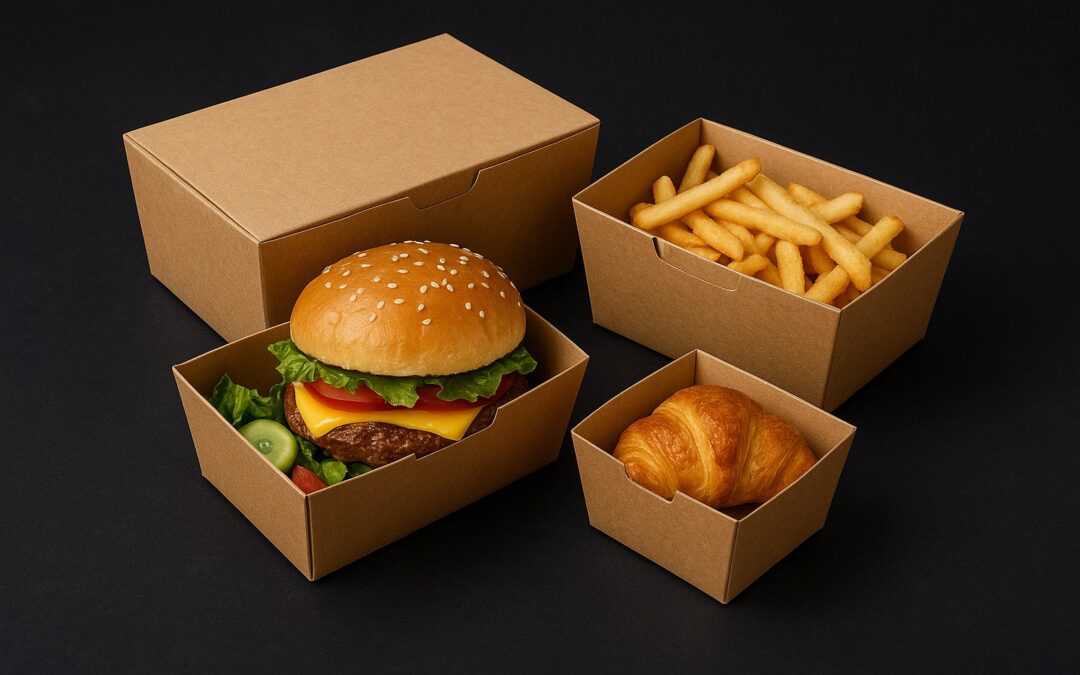
It needs to keep food clean and fresh for a longer time. This is possible with safe and tested custom food packaging boxes that do not harm or ruin the meal. They must block air and moisture. They also must follow safety regulations. Using smart and unique designs improves shelf life and brand value.
Why Food Packaging Safety Matters?
It is important to make packaging with protective elements to protect food. Substandard packaging even makes people sick. Proper packaging keeps products fresh longer and builds customer trust. Customer Loyalty comes back when people feel confident in a brand. It needs to follow all health laws that ensure safety and avoid legal problems.
Materials to Use in Packaging for Food
Different materials are used to make boxes safe. Green or eco-friendly packaging is the latest trend in the United States. Other materials serve different purposes; some are strong, some are light, some are perfect for dry food.
Common materials include:
- Kraft paper
- Cardboard
- Corrugated board
These come from natural components, making them safe for consumers.
Paper and Cardboard for Food Products
Paperboard and cardboard are great for dry food like snacks and cereals. They are light and easy to print on. Properly coated cardboard is food-grade safe. It protects against dust and light. Many brands prefer to use paper because it is natural. Wet or oily foods need a safe inner lining. Both materials are safe and affordable options for packaging all food products.
Packaging Free from BPA and Toxicity
Reliable suppliers now provide their alternatives. Always check for safety labels. It needs to use safe materials that avoid health hazards for children and adults. The best materials for food storage boxes are always free from toxins and certified for safety.
Government Regulations
US regulations govern which materials can come into contact with food. Products must pass safety tests by the American Food and Drug Administration. Authorities check for chemicals and harmful substances. Only approved materials are allowed. It is ideal to build customers’ trust. Safe packaging always meets legal standards.
Best Packaging for Long Shelf Life
Some packaging types extend food freshness. Strong barriers keep air and moisture out. Some examples are here.
- Packaging with vacuum seals
- Boxes with tight lids
- Metal cans
- Multi-layer flexible pouches
These block oxygen and bacteria. They slow spoilage. The best option depends on the food type. Pizza Packaging Boxes are designed to keep meals hot and fresh during delivery.
Harms of Poor Quality Packaging
Low-quality packaging can cause serious problems. Risks include:
- Chemical leakage into food
- Bacterial contamination
- Bad smell or taste
- Short shelf life
- Loss of customer trust
Tips to Select Safe Options
Safe packaging requires care. Focus on quality before price. Consider your product’s needs. Helpful tips:
- Use certified materials
- Test packaging with your product
- Follow government regulations
- Work with trusted suppliers
Proper packaging protects customers and strengthens the brand.
Conclusion
Safe food packaging is tested, reliable, and designed for the food type. Follow regulations and choose trusted materials. Many brands now switch to green solutions to reduce waste. Natural and safe materials protect both health and the environment. Strong and certified designs build customer confidence. Smart packaging choices also improve shelf life and brand image.


