
Introduction
There’s a certain kind of cigar smoker who doesn’t want something gentle. They want to feel it — the full weight of tobacco on the palate, a smoke that demands attention rather than politely asking for it. That’s exactly the crowd Camacho Cigars was built for. Bold, unapologetic, and rooted in decades of Honduran craftsmanship, Camacho has carved out a reputation that goes well beyond marketing.
It’s a brand that serious aficionados keep coming back to, not out of habit, but because the sticks genuinely deliver. If you’ve ever been curious about what separates Camacho from the dozens of other premium cigar brands out there, you’re in the right place.
The Origins: A Honduran Story Worth Knowing
Camacho’s story starts in Honduras, which matters more than people realize. The brand was founded by Simon Camacho, a Cuban exile who brought his tobacco knowledge and passion to Central America after leaving Cuba in the 1960s. Honduras, particularly the Jamastran Valley, turned out to be one of the most fertile grounds for growing Corojo tobacco — a varietal originally from Cuba that produces leaves known for their oily texture, robust flavor, and natural pepper-forward characteristics.
What made Camacho different from the start was an obsession with Corojo. While many other blenders were chasing milder, more commercial profiles, Camacho doubled down on the bold stuff. The Jamastran Valley’s volcanic soil, climate, and altitude created a growing environment that let Corojo express itself in ways it couldn’t elsewhere. That terroir became the foundation of everything the brand would later build — and it still shows up in every smoke today.
By the time Davidoff of Geneva acquired the brand in 2008, Camacho already had a cult following among smokers who liked their cigars on the stronger end. The acquisition brought resources and reach, but the identity stayed intact. That’s genuinely rare in the cigar world, and it says a lot.
What Makes the Tobacco So Different
When people talk about Camacho, they eventually talk about Corojo. It’s almost unavoidable. The Corojo tobacco leaf that anchors most of Camacho’s blends is grown on the brand’s own farms in the Jamastran Valley — and that farm-to-roller control is a big part of what makes the product consistent year after year.
Corojo leaves are notoriously difficult to grow. They’re thin-skinned, susceptible to disease, and require careful shade-grown cultivation. But the payoff is a leaf that burns beautifully, produces dense, creamy smoke, and delivers a flavor complexity that broader-leaf varietals just can’t match. You get natural cedar notes, a spice that builds rather than bites, and a sweetness underneath it all that keeps things interesting from first light to final third.
Beyond the Corojo, Camacho blenders work with a range of Honduran tobacco varietals depending on the line. The American series leans on Connecticut Broadleaf for its maduro offerings. The Triple Maduro — a genuinely impressive construction — uses three different maduro leaves in the filler, binder, and wrapper, creating an almost dessert-like depth that’s still undeniably powerful. That kind of layered thinking in the blend room is what separates a craft operation from a factory churning out mass-market sticks.
Breaking Down the Core Lineup
Understanding Camacho means spending some time with its core lines, because they’re not all the same animal despite sharing a family resemblance.
The Camacho Connecticut is where the brand shows it can do nuance. Don’t let the name fool you — this isn’t a flimsy, light-bodied smoke built for beginners. The wrapper is a silky Connecticut Shade leaf, but the Honduran filler tobaccos underneath give it genuine body and backbone. It’s medium to full in strength, with natural cream, toasted bread, and light spice. If someone tells you Connecticut wrappers are boring, hand them a Camacho Connecticut and watch them reconsider.
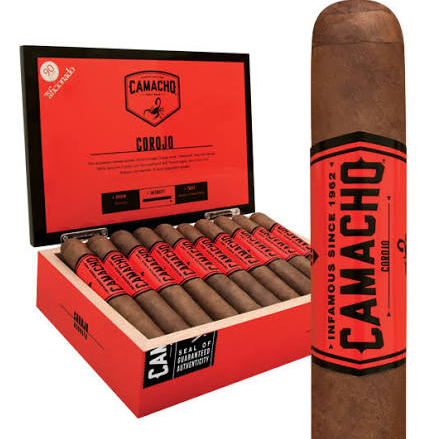
The Camacho Corojo is what most veterans reach for first. Full-bodied, spice-forward, and loaded with leather, dark fruit, and black pepper on the retrohale — it’s the flagship line for a reason. A box-pressed format gives it a satisfying density in the hand, and the burn is consistently even throughout.
Camacho American Barrel-Aged was a bit of a departure when it launched, blending tobaccos that were aged in American whiskey barrels to add a subtle sweetness and complexity. The result is something genuinely unique — not gimmicky, but actually transformative in how the barrel aging softens the sharper edges of the tobacco while adding depth.
The Triple Maduro deserves its own conversation. Three maduro leaves — filler, binder, and wrapper — all fermented for extended periods to develop maximum sweetness and minimal ammonia. The smoke is thick and dark, with espresso, dark chocolate, and dried fruit notes. It’s rich without being heavy, and it’s one of the few full-bodied smokes that doesn’t feel like a punishment.
Strength Without Sacrifice: The Flavor Philosophy
Here’s where a lot of strong cigars fall apart — they’re powerful but one-dimensional. Camacho has always understood that strength and complexity aren’t mutually exclusive. The goal, from the blending table, has been to build cigars that hit hard and taste interesting all the way through.
That philosophy shows up in the construction. Camacho’s rollers, primarily based at the STG Honduras factory (formerly known as Diadema), are trained to roll with a consistency that keeps draw resistance low and burn evenness high. A poorly rolled full-bodied cigar is a punishment. A well-rolled one is an experience. The difference is entirely in the hands of the torcedor, and Camacho’s factory standards are genuinely respected in the industry.
The tobacco fermentation process also plays a huge role. Maduro tobaccos go through extended fermentation — sometimes up to three years — which breaks down starches into sugars and reduces the harshness that comes with raw, green tobacco. Camacho’s maduro offerings benefit from this patience in ways that show up clearly in the smoke: nothing sharp or acidic, just depth and sweetness riding under the natural tobacco strength.
How Camacho Compares to Other Bold Brands
Ask any serious cigar smoker to name the top full-bodied brands, and a few names come up every time — Liga Privada, Padron, My Father, and Camacho. Each occupies a slightly different corner of the bold end of the spectrum.
Liga Privada is earthy and barnyard-forward, with the kind of rustic complexity that draws comparisons to old-world Cuban tobacco. Padron leans toward dark, roasted cocoa notes with a consistency so reliable it borders on mechanical. My Father brings Nicaraguan tobacco aggression with sweetness and spice in near-perfect balance.
Camacho’s lane is the Corojo Honduran experience — spice, leather, and richness built on a foundation of one of the most storied tobacco varietals in the world. If Padron represents Dominican and Nicaraguan blending at its peak, Camacho is its Honduran counterpart: distinct, assertive, and proud of where it comes from. The comparison isn’t a competition — they’re different enough to justify owning both. But if you’ve worked your way through the milder stuff and want something that feels genuinely different, Camacho is a logical and rewarding destination.
Pairing Camacho: What to Drink With It
Full-bodied cigars call for drinks that can hold their own. Light lagers or delicate white wines get buried. What works?
A single malt Scotch whisky with good peat and smoke complements the Corojo’s spice without fighting it. A barrel-aged bourbon — something with high rye content — echoes the peppery notes and adds a vanilla sweetness that plays nicely against the leather in the filler. Cold brew coffee works remarkably well too, especially with the Triple Maduro, where the coffee’s natural acidity brightens the espresso and dark chocolate notes in the smoke.
Dark rum is another pairing that doesn’t get enough credit with Honduran cigars. The molasses-forward sweetness in aged Guatemalan or Barbadian rums sits beautifully alongside a Camacho Corojo, and the sugar cane character of the spirit softens the spice without eliminating it.
Where to Buy Camacho and What to Expect
Camacho is available through quality premium cigar retailers. CigarLane carries a curated selection of premium cigar brands, and for Camacho specifically — or any of the other bold, full-bodied options across brands like Drew Estate, La Flor Dominicana, or Alec Bradley — it’s worth browsing a retailer that sources authentic, properly stored product. Cigars stored poorly lose their nuance fast. A box that’s been sitting in dry conditions develops cracks in the wrapper and loses the essential oils that carry so much of the flavor.
Pricing for Camacho falls in the mid-to-premium range — typically between $8 and $16 per stick depending on the line and vitola. For the tobacco quality and construction you’re getting, that’s genuinely reasonable. The Triple Maduro and American Barrel-Aged lines sit at the higher end, as they should given the extended processing those tobaccos require.
FAQs About Camacho Cigars
Are Camacho cigars suitable for beginners?
Honestly, most of them aren’t the best starting point. The Corojo and Triple Maduro lines are full-bodied and will overwhelm someone who isn’t used to stronger tobacco. The Connecticut line is the most accessible, with a medium to full body that won’t punish a newer smoker while still delivering real flavor.
Where are Camacho cigars made?
Camacho cigars are produced in Honduras, primarily at the STG Honduras factory. The tobacco is grown on Camacho’s own farms in the Jamastran Valley.
What’s the difference between the Corojo and Connecticut lines?
The Corojo is the flagship full-bodied line, spice-forward and rich with leather and dark fruit. The Connecticut uses a smoother Connecticut Shade wrapper and delivers a creamier, more approachable profile — though still with genuine body underneath.
Is Camacho owned by Davidoff?
Yes, Davidoff of Geneva acquired the Camacho brand in 2008. The production and blending have remained in Honduras, and the brand has kept its bold identity.
How should I store Camacho cigars?
In a humidor maintained at 65–70% relative humidity and around 65–70°F. Camacho’s oily Corojo wrapper benefits from proper humidity — too dry and the wrapper can crack; too wet and the cigars won’t burn cleanly.
Which Camacho line has the most complexity?
The Triple Maduro is widely considered the most layered of the lineup, with espresso, dark chocolate, and dried fruit notes evolving through each third of the smoke.
Conclusion
Camacho has earned its reputation the old-fashioned way — through consistent quality, a clear identity, and tobacco that genuinely speaks for itself. It’s not a brand that needs to reinvent itself every season or chase trends. The Corojo heritage, the Honduran terroir, and a blending philosophy built around bold character without sacrificing complexity have made it one of the most respected names in the full-bodied cigar world.
Whether you’re lighting up a Connecticut for an afternoon smoke or saving a Triple Maduro for a slow evening, you’re getting a cigar that was made with intention. That’s rarer than it should be, and it’s exactly why Camacho keeps showing up in the collections of smokers who know what they’re doing.


