
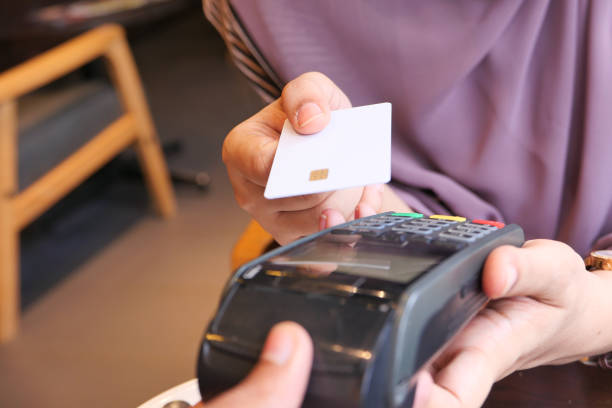
Imagine walking into a networking event, meeting someone impressive, and instead of fumbling through your wallet for a crumpled paper card, you simply tap your phone against theirs — and in an instant, your full contact details, portfolio, social profiles, and website land on their device. No app required. No paper exchanged. Just a clean, seamless digital handshake.
That’s the power of an NFC business card, and it’s quietly changing the way professionals connect around the world.
What Exactly Is an NFC Business Card?
NFC stands for Near Field Communication — a short-range wireless technology that allows two devices to exchange data when they’re held close together, typically within a few centimeters. An NFC business card is a physical card (usually made of PVC, metal, bamboo, or recycled plastic) embedded with a tiny NFC chip. When someone taps it with an NFC-enabled smartphone, it instantly opens a digital profile, contact page, website, or any URL you’ve programmed into it. Think of it as a traditional business card that has been given a serious technological upgrade. It looks and feels like a card, but it behaves more like a smart device — one that’s always updated, always ready, and never runs out.
How Does NFC Technology Work?
NFC technology operates on the 13.56 MHz radio frequency and enables two-way communication between devices. It’s the same technology behind contactless payments like Apple Pay, Google Pay, and Samsung Pay, as well as transit cards and hotel key cards. When your NFC business card is tapped against an NFC-enabled smartphone — and virtually all modern Android and iPhone models support this — the chip inside the card sends a signal to the phone, which reads the embedded data and takes the programmed action, such as opening a URL or saving a contact (vCard). The entire process takes less than a second. There’s no Bluetooth pairing, no Wi-Fi connection, and no app needed on the recipient’s phone. It just works, instantly and intuitively.
NFC Business Cards vs. Traditional Paper Cards
Let’s be honest — the paper business card has had a long and loyal run. But it comes with real limitations that modern professionals can no longer afford to ignore.
Paper cards get lost, damaged, or thrown away. They become outdated the moment your phone number or job title changes. They cost money to reprint every time something shifts. And let’s not forget the environmental toll — billions of paper business cards are printed globally each year, with a significant portion ending up in the bin within days.
An NFC business card eliminates all of these problems. Your information lives in the cloud, meaning you can update it anytime without replacing the physical card. One card can serve you for years. And because it’s a one-time purchase, it’s far more cost-effective in the long run. For anyone serious about making a strong first impression, the choice is becoming increasingly obvious.
What Information Can an NFC Business Card Share?
This is where things get genuinely exciting. Unlike a paper card, which is limited to whatever text fits in a small rectangle, an NFC business card can direct recipients to a rich digital profile containing almost anything you want to share. Common use cases include full contact details (name, phone, email, address), LinkedIn profile, personal or company website, portfolio or showreel, WhatsApp chat link, Instagram, X (formerly Twitter), or other social media profiles, YouTube channel, Calendly booking page, and payment links like PayPal or bKash. Many professionals use platforms like Blinq, HiHello, Popl, Linq, or Dot to manage their NFC card profiles. These services let you build a polished landing page and update your information in real time — all tied to the same physical card.
Who Should Use an NFC Business Card?
The short answer? Almost anyone who networks professionally. But let’s look at who benefits most. Entrepreneurs and startup founders can make a bold, tech-forward impression at pitch events and conferences. Freelancers and creatives can instantly share their full portfolio with potential clients. Sales professionals can share product brochures, pricing pages, and contact details without carrying stacks of paper. Corporate executives can represent their brand with a premium metal NFC card that communicates quality and innovation. Real estate agents can share property listings and contact forms on the spot. Even students heading into job fairs are using NFC cards to stand out from the crowd. Essentially, if you meet people professionally, an NFC business card works for you.
The Environmental Case for Going Digital
This matters more than many people realize. The global business card industry prints an estimated 10 billion paper cards every year. Of those, studies suggest that around 88% are thrown away within a week of being handed out. That’s an enormous amount of paper, ink, and energy going to waste. NFC business cards are a sustainable alternative. A single card, used for years, replaces thousands of paper cards over the course of a career. Many NFC cards are also made from eco-friendly materials like recycled PVC, bamboo, or even wood. Brands like Mobilo, Kado, and One Card have made sustainability a key part of their pitch, and it resonates strongly with environmentally conscious professionals and businesses.
Are NFC Business Cards Safe to Use?
Security is a fair concern, and it’s worth addressing clearly. NFC technology transmits data only at very close range — a few centimeters — which makes it difficult for anyone to intercept your information without your knowledge. Your NFC card doesn’t store sensitive data like passwords or financial details; it simply points to a URL or contact file. That said, there are a few best practices to keep in mind. Use a reputable NFC card platform with privacy controls. Avoid sharing more personal information than necessary. Some platforms allow you to password-protect your digital profile or control who sees what. Overall, NFC business cards are considered very safe for everyday professional networking use.
How to Get Started with Your NFC Business Card
Getting your first NFC business card is simpler than you might expect. Here’s a quick roadmap to get you going. First, choose a provider — popular options include Popl, Blinq, HiHello, Mobilo, and Linq, each offering different card designs and profile management features. Second, design your card — most providers offer customization options including your name, company logo, and card material (PVC, metal, wood). Third, build your digital profile — this is the page people see when they tap your card. Add your contact info, social links, website, and anything else relevant. Fourth, link the card to your profile — this is usually done through the provider’s app by tapping the card against your phone. Fifth, start sharing — you’re ready to tap and connect with anyone who has an NFC-enabled smartphone. Most modern iPhones (iPhone 7 and later) and Android phones support NFC natively, so compatibility is rarely an issue.
The Cost of NFC Business Cards
One of the most common objections to NFC cards is cost. A single NFC card typically ranges from $15 to $60 USD depending on the material, design, and platform. Premium metal cards can go higher. Compare this to paper cards — which might seem cheap at $20 for 250 — but require reprinting every time your details change, which adds up fast over time. When you factor in the longevity of an NFC card (potentially years of use from one card), the math clearly favors the digital option. Some providers also offer team plans for businesses, making it practical to equip an entire sales or marketing team with branded NFC cards at a reasonable per-card cost.
FAQ: Your NFC Business Card Questions Answered
Do both people need an NFC-enabled phone for this to work? Only the person receiving the tap needs an NFC-enabled phone. The card itself is passive — it doesn’t need a battery or connectivity. Most smartphones made after 2015 support NFC, including iPhones (7 and above) and the vast majority of Android devices.
Can I update my information after the card is made?
Yes — and this is one of the biggest advantages. Your physical card points to a digital profile, which you can update anytime through your provider’s app or dashboard. The card itself never needs to change.
What happens if someone doesn’t have NFC on their phone?
Many NFC cards also include a QR code as a backup. Scanning the QR code with any smartphone camera leads to the same digital profile, so no one gets left out.
Can I use an NFC business card for my whole team?
Absolutely. Most NFC card platforms offer business or team plans that allow you to manage multiple profiles from a central dashboard, making it easy to onboard new employees and maintain brand consistency.
Is there a subscription fee involved?
It depends on the provider. Some charge a one-time fee for the card and offer basic profile features for free. Others operate on a subscription model for advanced features like analytics (seeing how many times your card was tapped), CRM integrations, and multiple profile modes.
Will my NFC card work internationally?
Yes. NFC is a universal technology that works the same way regardless of country or carrier. Your card will work anywhere in the world where NFC-enabled smartphones are used.


