
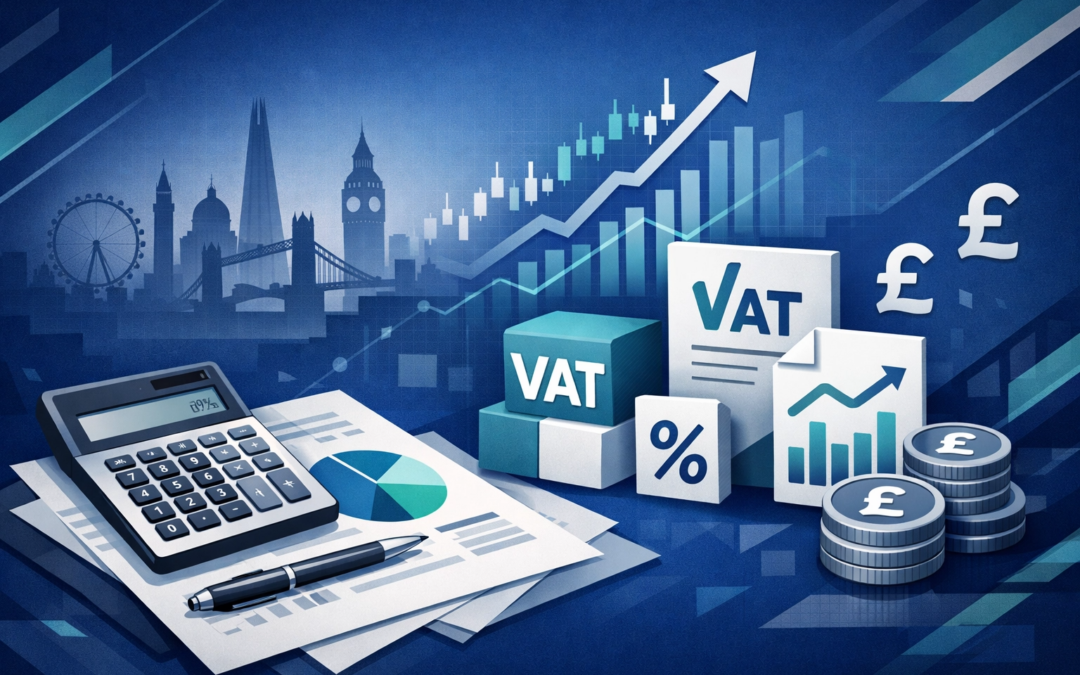
Whether you are a sole trader, a growing startup, or an established company operating in London, understanding VAT returns is essential to staying compliant and avoiding costly penalties.
What is a VAT return?
A VAT (Value Added Tax) return is a form that businesses submit to HM Revenue & Customs (HMRC), typically every quarter. It reports the total VAT charged to customers (output tax) and the total VAT paid on business purchases (input tax). The difference between the two determines whether a business owes money to HMRC or is entitled to a refund.
Who needs to register for VAT in London?
Any business with a taxable turnover exceeding the current VAT threshold — £90,000 per year (as of 2024) — must register for VAT. London-based businesses across retail, hospitality, professional services, construction, and e-commerce are all subject to this requirement. Voluntary registration is also possible for businesses below the threshold, which can be advantageous for reclaiming VAT on expenses.
How to file a VAT return
Since April 2022, most VAT-registered businesses in the UK must follow Making Tax Digital (MTD) rules, meaning VAT returns must be submitted digitally through HMRC-compatible software. London businesses commonly use platforms such as Xero, QuickBooks, Sage, or FreeAgent to maintain digital records and submit returns directly.
Filing must be completed within one calendar month and seven days after the end of each VAT accounting period. Late submission or payment attracts a points-based penalty system introduced in January 2023, which can lead to financial surcharges if points accumulate.
Common VAT schemes for London businesses
HMRC offers several VAT accounting schemes that can simplify bookkeeping. The Flat Rate Scheme is popular among small London businesses — it allows you to pay a fixed percentage of turnover rather than calculating VAT on every transaction. The Cash Accounting Scheme is ideal for businesses with unpredictable cash flow, as VAT is only paid when customers actually pay their invoices, not when the invoice is raised.
Getting professional help in London
London has a vast network of chartered accountants and VAT specialists who can manage your returns, ensure accuracy, and help optimise your VAT position. Hiring a local accountant familiar with London’s diverse business sectors — from tech firms in Shoreditch to restaurants in Soho — can save time and reduce the risk of HMRC enquiries.


