
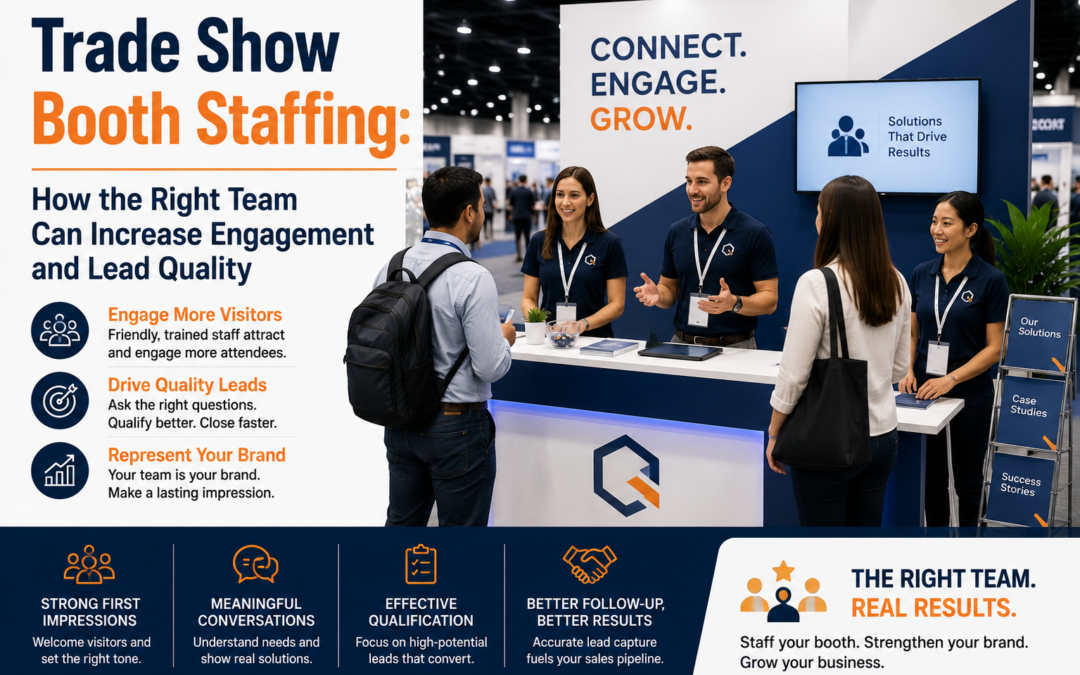
A well-designed trade show booth can attract attention, but the people inside it determine what happens next.
Visitors may stop because of strong graphics, an interactive display, or an interesting product demonstration. However, whether they stay, ask questions, and become qualified leads often depends on how the booth team engages with them.
This is why trade show booth staffing deserves the same level of planning as booth design, logistics, and marketing. The right team can create better conversations, identify valuable prospects, and help turn show-floor traffic into meaningful business opportunities.
Why Booth Staffing Matters More Than Many Exhibitors Realize?
Trade shows move quickly. Attendees often have limited time and dozens of booths competing for their attention. When someone enters your exhibit, your team may have only a short window to create a positive impression.
Poor booth staffing can waste that opportunity.
Common problems include staff members checking phones, talking only to colleagues, approaching visitors too aggressively, or giving the same sales pitch to everyone. These behaviors can make even an impressive booth feel unwelcoming.
Effective trade show staffing creates a different experience. The team is approachable, attentive, informed, and prepared to adapt conversations based on the visitor.
Choose Staff Based on the Event Goal
The best employees in the office are not automatically the best people for the show floor.
Before selecting booth staff, consider the main objective of the event. If the goal is lead generation, you need team members who can start conversations naturally and qualify prospects efficiently. If the event focuses on technical products, subject-matter experts may be essential. For relationship-driven events, experienced account managers may be more valuable.
A balanced booth team might include:
- Sales representatives
- Product specialists
- Technical experts
- Senior leadership
- Customer relationship managers
- Trained brand ambassadors
The right combination depends on the audience and the type of conversations you expect to have.
Train the Team Before the Show
Booth staff should never arrive without preparation.
Even experienced employees need a clear event briefing. Everyone should understand the campaign message, featured products, target audience, lead qualification criteria, and follow-up process.
Pre-show training should cover questions such as:
- Who are our priority prospects?
- What are the key talking points?
- Which products or services should we highlight?
- What questions should we ask visitors?
- How will leads be captured?
- When should a conversation be handed to a specialist?
This preparation helps create a more consistent visitor experience and reduces confusion during busy periods.
Start Conversations Without Sounding Scripted
One of the most important booth staffing skills is knowing how to approach attendees naturally.
Generic questions such as “Can I help you?” often lead to a quick “No, thanks.” An aggressive sales pitch can be equally ineffective.
A better approach is to use open-ended questions related to the attendee’s interests or challenges.
For example:
- “What brought you to the show this year?”
- “What are you currently using for this process?”
- “Which part of this solution are you most interested in?”
- “Are you exploring options for a current project?”
The goal is to create a conversation, not deliver a memorized speech.
Focus on Lead Quality, Not Just Lead Volume
A large number of scanned badges may look impressive in a post-show report, but volume alone does not guarantee results.
Strong trade show booth staffing services should support lead qualification. Staff need to identify whether a visitor is a potential buyer, partner, existing customer, competitor, student, or general attendee.
Simple qualifying questions can help reveal:
- Business needs
- Purchase authority
- Project timelines
- Current challenges
- Budget considerations
- Level of interest
This information gives the sales team valuable context after the event.
Ten well-qualified conversations can sometimes be more useful than hundreds of badge scans with no meaningful notes.
Match Staff Roles to Different Booth Zones
Larger exhibits often contain multiple activity areas, such as product displays, demo stations, reception counters, lounges, and private meeting rooms.
Assigning clear roles can improve visitor flow.
For example, one team member may welcome attendees near the entrance, while a product specialist handles demonstrations. Sales representatives can focus on qualified conversations, and senior staff may manage scheduled meetings.
Without clear roles, several employees may approach the same visitor while other attendees are ignored.
Good staffing should support the physical design of the booth.
Avoid Overstaffing and Understaffing
Too few staff members can leave visitors waiting. Too many can make the booth feel crowded and intimidating.
The right staffing level depends on:
- Booth size
- Expected traffic
- Number of demo areas
- Meeting schedules
- Event duration
- Visitor interaction time
Shift planning also matters. Trade show days can be long, and tired staff are less likely to remain energetic and attentive.
Scheduled breaks help maintain consistent performance throughout the event.
Use Technology Without Losing the Human Connection
Lead capture apps, badge scanners, CRM tools, and digital forms can make data collection more efficient. However, technology should support conversations rather than replace them.
A badge scan with no context is limited.
Whenever possible, staff should record useful notes such as the visitor’s main interest, specific challenge, requested information, and preferred next step.
This creates a stronger foundation for personalized follow-up after the show.
Consider Professional Booth Staff When Needed
Not every exhibitor has enough internal employees to cover a busy event. In these situations, professional trade show staff or brand ambassadors can provide additional support.
They may help with:
- Welcoming attendees
- Managing registration
- Supporting product demonstrations
- Distributing materials
- Directing visitors
- Collecting basic lead information
The key is proper training. Temporary staff should understand the brand, the booth objectives, and when to connect a visitor with an internal team member.
An experienced exhibit partner such as Purple Exhibits can help brands think beyond the physical booth by considering how staffing, visitor flow, engagement areas, and event execution work together.
Successful trade show booth staffing is not about placing available employees inside an exhibit and hoping for good results. It requires careful selection, training, clear roles, natural communication, and a shared understanding of what makes a valuable lead.
The booth may attract attendees, but the team creates the experience.
When staff members are prepared, approachable, and focused on meaningful conversations, they can improve visitor engagement and give the sales team better opportunities after the event.
Ultimately, the right booth team does more than collect contacts. It helps turn brief show-floor interactions into relationships worth continuing.


